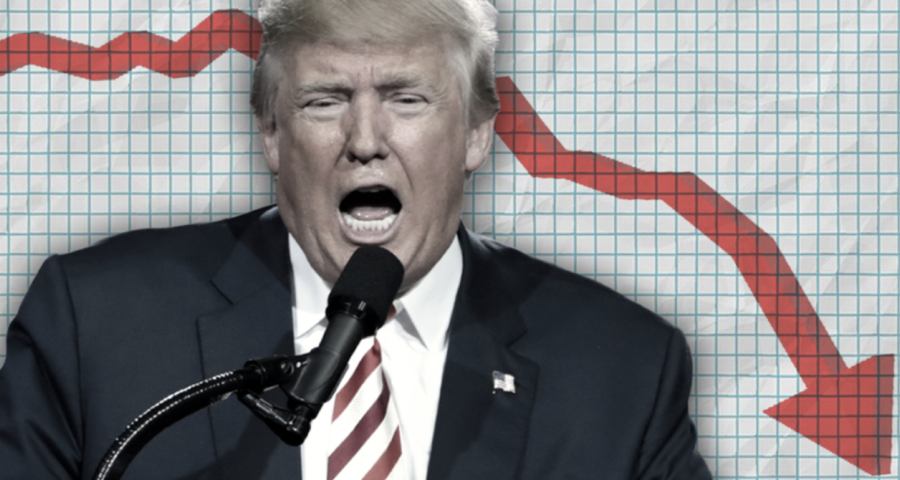
Trump and economy

Research/Study Research/Study

After the economy fell flat in 2025, Fox promised: “Next year looks like it’s going to be amazing”

Fox previously assured viewers that Trump's policies would “immediately” improve the economy

After Fox News spent much of 2025 struggling to explain President Donald Trump’s underwhelming economic performance, the network is now promising viewers that next year will be better.

Despite the often chaotic nature of the administration’s policy implementation, as well as worsening public perception of the economy, Trump apologists at Fox are pinning their hopes for next year on Trump’s signature tax cut for the rich delivering unprecedented returns for average Americans. However, the so-called “Big, Beautiful Bill” will effectively lower incomes for many workers due to its draconian cuts to government programs used by significant numbers of Americans, especially when that effect is combined with the ongoing effects of Trump’s tariffs.

  • Fox promises a better economy in 2026

    • Fox & Friends hosts highlighted Trump administration officials’ promises of a better economy in 2026. Ainsley Earhardt said: “President Trump said next year he’s going to give back refunds out of the tariffs because we’ve taken in trillions of dollars. … JD Vance predicts that 2026 will be the year that the economy really takes off, and Scott Bessent’s been talking about this.” Brian Kilmeade added: “He said why because the programs that they have really launched … the new year, and that’s when people get a lot of their refunds, and you’ll see the restructure with their … tax decreases and refunds.” [Fox News, Fox & Friends, 12/3/25]
    • Fox Business anchor Maria Bartiromo: “When you’re looking ahead to 2026, you also cannot underestimate the impact of the Big, Beautiful Bill, because this legislation is going to unleash and take effect in the new year.” Bartiromo added: “It’s also, of course, including a lot of tax code changes for citizens like no tax on tips and no tax on Social Security. As we see the Big, Beautiful Bill take effect in 2026, that should alleviate a lot of the pressure.” [Fox News, America’s Newsroom, 12/9/25]
    • Fox Business’ David Asman: “I think we're going to have this huge explosion of growth in 2026, the likes of which we haven't seen since Ronald Reagan was growing the economy at 7% a year.” Fox host Sean Hannity added: “I expect good things in 2026.” [Fox News, Hannity, 12/10/25]
    • Fox & Friends co-host Lawrence Jones: “Part of the reason why Americans aren't feeling some of the pain relief gone is because the Big, Beautiful Bill hasn't been implemented. … That’s going to surge the economy, and January 1 is when a lot of this is supposed to be implemented.” Jones added: “You’re talking about those tax cuts that took place, no tax on tips, no tax on Social Security.” [Fox News, Fox & Friends, 12/1/25]
    • Fox & Friends co-host Brian Kilmeade: Americans are going to feel more optimistic in 2026 because Trump “passed the Big, Beautiful Bill.” Kilmeade continued: “A lot of people are going to get more money back in their taxes. That's going to be effective. They’re going to take less money out starting in 2026, that could be effective.” [Fox News, Fox & Friends, 11/26/25]
    • Fox Business host Charles Payne: “Next year looks like it’s going to be amazing” thanks in part to “the Big, Beautiful Bill becoming a law with the tax refunds.” [Fox News, America Reports, 11/24/25]
    • Kilmeade: In 2026, “programs go into effect and some of the spending goes out there, the Trump Bucks … you have anybody who’s in a job where you’re getting tips, immediately when you file your taxes and get a refund, you’re going to get a refund now, because you’re not paying taxes on it.” Kilmeade added: “So that’ll be an immediate impact.” [Fox News, Fox & Friends, 11/21/25]
    • Asman: “Affordability has to be felt in Americans’ pockets,” and “next year … Americans are going to get the benefits … of the lower taxes on tips, on overtime pay, on all that other stuff.” [Fox News, The Story, 11/19/25]
  • Fox also promised Trump’s policies would deliver a rosy economy in 2025

    • Several Fox hosts promoted Trump’s campaign promises to “immediately bring prices down” and “end the devastating inflation crisis immediately.” Fox anchor Sandra Smith stated that Trump “had me at let’s address this inflation nightmare.” Sean Hannity claimed that voting for Trump would result in “next to zero inflation,” and said that because of Trump’s victory, “we’re going to pay lower prices in the grocery store.” Fox Business host Taylor Riggs said Scott Bessent’s nomination as treasury secretary would lead to “lower prices, maybe immediately.” After Trump took office and prices continued to rise, Fox hosts blamed the Biden administration, claimed government statistical agencies had faked economic data, or argued that it wasn’t realistic to expect Trump to immediately lower prices as he promised to do. [Media Matters, 2/25/25]
    • At least 90 people across Fox News and Fox Business promoted and cheered on Trump’s pronouncement of his “Liberation Day” tariffs in April, with many arguing they would be beneficial to the U.S. economy. Fox figures promoted the announcement as “drawing historic investment” in the U.S. that will “protect homegrown companies” and do “big things for America.” [Media Matters, 4/1/254/11/25]
    • Multiple Fox personalities claimed Trump’s tariffs would lead to a strengthened American manufacturing sector. Fox host Jesse Watters claimed: “Tariffs can unwind years of bad deals. Americans want to reindustrialize.” Fox host Laura Ingraham dismissed criticism that tariffs wouldn’t aid U.S. manufacturing as “simplistic.” Fox Business host Elizabeth MacDonald similarly attacked criticism of the tariffs, saying: “The liberal media making it clear they are not focused on why it is necessary to bring back American manufacturing jobs.” Fox Business host Larry Kudlow endorsed the tariffs, saying: “If you make their goods more expensive at home, then hopefully Americans will buy America, produce America, build factories in America. That's the plan.” [Media Matters, 4/17/25]
  • The Trump economy stumbled in 2025

    • Trump’s tariffs were projected to reduce GDP and employment growth while adding between $1,100 and $2,100 per household per year in unnecessary costs to American families. Multiple economic research organizations have estimated the effects of the Trump administration’s widespread and ever-changing tariffs on the growth of the U.S. economy and budgets of American families. On the low end, the Tax Foundation estimated that Trump’s tariffs “will reduce US GDP by 0.5%,” will likely cause 503,000 job losses, and will “amount to an average tax increase per US household of $1,100 in 2025 and $1,400 in 2026.” Yale’s Budget Lab estimated the same 0.5% drag on gross domestic product growth, 460,000 fewer jobs this year, and stated that the tariffs represent “a loss of $1,700 for the average household and $900 for households at the bottom of the income distribution.” On the high end, the Tax Policy Center estimated that Trump’s tariffs “will impose an average burden of about $2,100 per tax unit in calendar year 2026.” [Tax Foundation, 12/1/25; The Budget Lab at Yale, 11/17/25; Tax Policy Center, 12/11/25]
    • Trump has overseen “little change” in employment since he announced his “Liberation Day” tariffs in April, with multiple months of job losses. According to the Bureau of Labor Statistics, employment “has shown little change since April,” when Trump announced sweeping global tariffs. The delayed November jobs report included a revision showing that 26,000 jobs were lost in August, and the August jobs report included a revision showing a loss of 13,000 jobs in June. The delayed preliminary estimate for October showed that 105,000 jobs were lost that month, and the unemployment rate shot up to 4.6%, a more than four-year high. [NPR, 4/2/25; U.S. Bureau of Labor Statistics, 12/2/2512/16/259/5/25; Axios, 12/16/25]
    • Federal Reserve Chairman Jerome Powell expressed concern that the Trump economy may actually have been shedding jobs each month since April. The Wall Street Journal reported: “Powell said that Fed staffers believe that federal data could be overestimating job creation by up to 60,000 jobs a month. Given that figures published so far show that the economy has added about 40,000 jobs a month since April, the real number could be something more like a loss of 20,000 jobs a month, Powell said.” The Journal also noted that “published data already show the labor market has slowed significantly this year, down from rapid hiring after the Covid-19 pandemic. This slower pace means big data revisions can more easily reveal the economy is shedding jobs, not adding them.” [The Wall Street Journal, 12/10/25]
    • The U.S. economy suffered a contraction in the first quarter, leading to weak economic growth in the first half of 2025. According to the most recent estimate of U.S. gross domestic product from the Bureau of Economic Analysis, real GDP decreased 0.6% in the first quarter of 2025, and grew at an annual rate of 3.8% in the second quarter, for an average of just 1.2% growth during the first half of the year. This is in contrast to a real GDP growth of 1.6% in the first quarter of 2024 and an annual rate of 3% in the second quarter of that year, for an average of 2.3% for the first half of last year — nearly double the growth of the same period this year. [U.S. Bureau of Economic Analysis, 9/25/25, 9/26/24]
    • Manufacturing activity has contracted for nine months in a row, and manufacturing employment has continually declined since the April tariff announcement. According to the Institute for Supply Management’s November 2025 Manufacturing PMI Report, “Economic activity in the manufacturing sector contracted in November for the ninth consecutive month.” Many respondents in this survey of manufacturing supply executives cited difficulties from Trump’s tariffs and overall trade policy. Data from the Bureau of Labor Statistics shows a decline of 67,000 jobs in manufacturing employment between April and November. [Institute of Supply Management, accessed 12/5/25; Federal Reserve Bank of St. Louis, accessed 12/16/25]
    • Inflation re-accelerated following Trump’s tariff announcement in April. According to the widely-used Consumer Price Index measurement, the annual inflation rate grew from 2.3% in April to 3% in September, the most recent month available for the three primary measurements of inflation. The Personal Consumption Expenditures measurement showed inflation accelerating from 2.3% in April to 2.8% in September. And the Producer Price Index measurement showed that the 2.4% inflation rate in April had increased to 2.7% in September. (The Labor Department published a CPI reading for November showing annualized inflation at 2.7%, but economists cautioned that the latest data may be imprecise as a result of the prolonged federal government shutdown.) [Federal Reserve Bank of St. Louis, accessed 12/5/25; Bloomberg, 12/18/25; Twitter/X, 12/18/25, 12/18/25, 12/18/25]
    • Trump’s trade war resulted in a $12 billion farm bailout. As a consequence of Trump’s decision to impose tariffs on Chinese imports, China cut its “imports of U.S. soybeans from their usual 29 million metric tons of beans annually to zero until a deal was reached at the end of October,” with China normally accounting for about 25% of all U.S. soybean production. This year the Trump administration is planning to give up to $12 billion to farmers adversely affected by his trade policies. This follows a similar $23 billion farm bailout during the first Trump administration, a result of his previous trade war with China. [The Wall Street Journal, 12/8/25]
  • Economists explain that Trump’s policies have weakened the economy

    • The Washington Post reported that former Congressional Budget Office Director Douglas Elmendorf “said Trump is making things worse not just by imposing global tariffs, but also by opposing expanded health care subsidies and browbeating the Federal Reserve to lower interest rates.” Elmendorf said, “I don’t see this administration doing much to bring down prices, on balance,” adding: “People expect too much of our president in terms of bringing down prices. But they should expect presidents to push policies that move in the right direction.” [The Washington Post, 12/6/25]
    • American Enterprise Institute Director of Economic Policy Studies Michael Strain: “It’s almost eerie” that the Trump administration is making similar “policy mistakes … that led to an increase in inflation and prices” as the previous administration. Strain added: “It’s like they’re using the same playbook. They’re both blaming corporations, denying the problem, saying, ‘Look at high employment.’ I don’t know a better word for it than ‘weird.’” [The Washington Post, 12/6/25]
    • Center for Economic and Policy Research senior economist Dean Baker: Trump’s “tariffs are the major cause of the higher inflation households have seen since Trump took office, in addition to the higher costs imposed by deporting much of the immigrant labor force.” [Center for Economic and Policy Research, 12/8/25]
    • King’s College London economics professor Jonathan Portes said the U.S. economy is performing “poorly, in part because of Trump’s policies on tariffs and immigration, but not disastrously, in part because of the AI investment boom.” [Newsweek, 12/10/25]
    • Moody’s Analytics chief economist Mark Zandi: Trump’s policies contributed to a “serious affordability crisis.” Zandi explained: “It didn’t have to be this way. Inflation was slowing at the start of this year and was on track to return to the Fed’s inflation target by year’s end. But higher tariffs, highly restrictive immigration policy, and de-globalization more broadly have upended that outlook, and inflation appears likely to remain stubbornly high for the foreseeable future. The high inflation, combined with a job market struggling to create jobs, rising unemployment, and slowing wage growth, means that the tough financial times low- and middle-income Americans are grappling with will continue on.” [Twitter/X, 11/23/25]
  • New Trump policies are likely to worsen the economy for many Americans in 2026 and beyond

    • CBO estimates show that Medicaid cuts in Trump’s Big, Beautiful Bill and Republicans’ refusal to extend expiring enhanced insurance premium tax credits will increase the number of uninsured Americans by 14 million. KFF explained: “When combining the impact of the reconciliation law with that of the expected expiration of the ACA’s enhanced premium tax credits, CBO estimates show that the number of uninsured people will increase by more than 14 million in 2034. That estimate does not account for the effects of the Trump administration’s ACA Marketplace Integrity and Affordability rule finalized earlier this year, so the overall change in the number of uninsured people could be even larger.” [KFF, 8/20/25]
    • Trump and Republicans’ refusal to extend expiring enhanced premium tax credits will increase premiums for millions of people by an average of 114%, adding hundreds or thousands to their annual insurance premium costs. A KFF report estimated that “subsidized Marketplace enrollees’ out-of-pocket premium payments will be 114% higher, on average.” According to the Urban Institute, “Net premiums will more than double, from $1,171 to $2,455, for people with incomes from 250 percent of FPL [federal poverty level] to 400 percent of FPL,” and will “nearly double, from $4,436 to $8,471, for people with incomes above 400 percent of FPL who receive subsidized Marketplace coverage under enhanced PTCs, but who would pay the full premium were they to expire.” [KFF, 10/28/25; Urban Institute, 9/17/25]
    • Multiple analyses show that the GOP tax bill will effectively take money from the poor to give to the rich due to its massive Medicaid cuts. According to The New York Times, the Penn Wharton Budget Model found that “people making between about $51,000 and $17,000 could lose about $700 on average in after-tax income beginning in 2026” as a result of Trump’s tax bill, and that “people reporting less than $17,000 in income would see a reduction closer to $1,000, on average.” Yale’s Budget Lab estimated that the bill “would result in a decline of almost 4 percent (over $800) to income for the bottom quintile, but an increase of over 4 percent (nearly $70,000) for the top 1 percent.” And a distributional analysis of the bill from the CBO showed that it would reduce income for the poorest 10% of Americans by 4% by 2029, while increasing the incomes of the top 10%. [Media Matters, 5/20/255/21/25]
    • Other analyses show that Trump’s tax cuts and tariffs combined will decrease income for all but the richest Americans. Yale’s Budget Lab determined in June that “the combination of 2025 tariff increases implemented as of June 1 and the One Big Beautiful Bill Act passed by the House of Representatives would reduce after-tax-and-transfer incomes on average among the bottom 80 percent of U.S. households.” A more recent analysis in September from the Center for American Progress reported: “New policies in the One Big Beautiful Bill Act, paired with the Trump administration’s tariffs, will leave the bottom 99 percent of Americans with less after-tax-and-transfer income by 2027, while the top 1 percent benefit—per combined scores from nonpartisan analysts.” [The Budget Lab at Yale, 6/12/25; Center for American Progress, 9/10/25]
    • Yale’s Budget Lab: “In the long run, real GDP growth slows because of the debt load from the One Big Beautiful Bill Act (OBBBA) that raises interest rates and results in crowding out. … GDP growth slows such that by 2054 the level of GDP is more than 3 percent smaller than it would have been if the bill were not enacted.” The analysis also explained that Trump’s signature tax bill temporarily gives “a boost to GDP growth that averages 0.2 percentage point per year from 2025 to 2027.” [The Budget Lab at Yale, 7/30/25]
    • The Trump administration is trying to shut down an affordable student loan repayment program early, shifting about 7 million Americans onto higher-cost repayment plans. The administration proposed in a court settlement to end the Saving on a Valuable Education plan early in 2026 rather than the legislative expiration date of July 1, 2028. The SAVE plan, created by former President Joe Biden’s administration, “lowered payments and offered quicker loan cancellation” according to The Washington Post. The Post noted that “the remaining three income-driven repayment plans … are more expensive” than the SAVE plan. The Post article cited two borrowers whose repayment costs on the other plans would go up by hundreds of dollars each month. [The Washington Post, 12/9/25]
    • European Centre for Economic Policy Research: “President Trump was elected, in part, on the promise of helping people lower down the income scale. Under his second administration, though, income and wealth gaps have only widened – and his policies are likely to further widen the gap.” The column continued: “Healthcare premiums for (lower-income) people who buy insurance through exchanges have risen dramatically. The supplementary food aid programme (SNAP, previously known as ‘food stamps’) was cut sharply during the recent government shutdown – deliberately by the administration, which argued in court cases that it had the authority to do so. The cost of electricity – essential to survival in a country with extremes of hot and cold – is up sharply in many markets. House prices remain high and shelter is increasingly unaffordable for many.” It added: “The President’s policies on trade, immigration, taxes, and artificial intelligence do not lower these costs. Nor does invective against the Fed or against immigrants. … Families already struggling to pay their bills are finding themselves squeezed further. Almost all the tax reductions from President Trump’s ‘Big Beautiful Bill’ go to people who are already well-off.” [Centre for Economic Policy Research, 12/4/25]