Research/Study
Fox is desperate to avoid blaming Trump for affordability concerns
Trump has taken multiple actions that have worsened inflation, yet Fox still blames Biden
Written by Zachary Pleat
Published
With the midterm elections little over a month away, Fox News and Fox Business personalities continue to blame the Biden administration for voters’ affordability concerns translating to preference for Democrats over Republicans in regard to the economy. In reality, the Trump administration and Republican lawmakers have taken numerous actions that are making Americans’ lives more expensive.
-
Multiple economic indicators have worsened under Trump
-
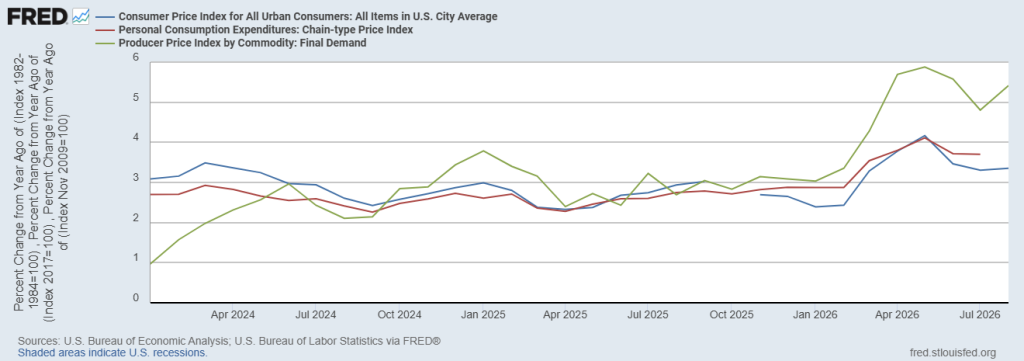
- Inflation was declining at the end of the Biden administration, but it accelerated following President Donald Trump’s April 2025 tariffs, and even more so after he attacked Iran at the end of February. [Federal Reserve Bank of St. Louis, accessed 9/22/26; The Associated Press, 4/3/25; Politico, 2/28/26]
-
-
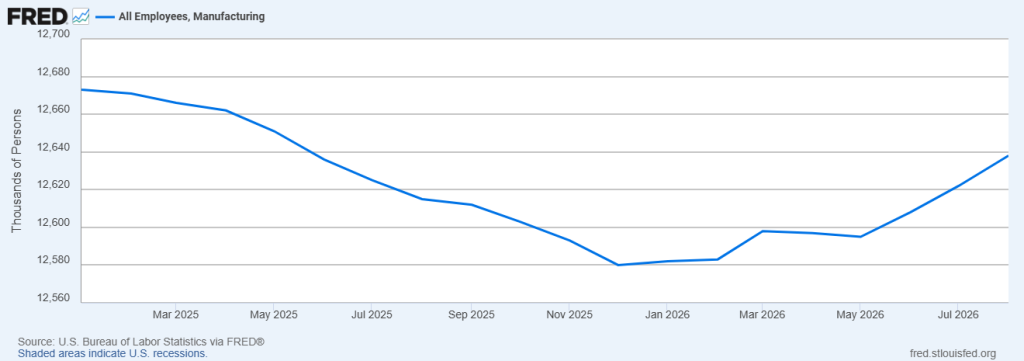
- Manufacturing jobs remain 35,000 below the amount when Trump entered office in January 2025 and have declined in all but five months of his second term so far. [Federal Reserve Bank of St. Louis, accessed 9/22/26]
-
-
-
Fox blames the Biden administration for negative perception of the Trump economy
-
- Fox Business host Jackie DeAngelis to a Republican guest: “Democrats have a six-point advantage over Republicans on the issue of the economy. Congressman, we’re less than 80 days away from the midterms, you and your colleagues need to turn the messaging around. And it’s really shocking to me that Americans would poll this way, because under Joe Biden, you had inflation of 9%, $5 gas, trillions of dollars of government spending, not much tax relief.” Her guest, Rep. French Hill (R-AR), replied: “The Joe Biden inflation, which had 9% — this is a real hangover the Trump administration has inherited when they came into office last year.” [Fox Business, Mornings with Maria, 8/19/26]
- Fox opinion writer Mehek Cooke on voter concerns about the economy: “This is a no-brainer. Joe Biden created the worst inflation crisis. President Trump doesn't have a light switch to turn it off, but he has done everything he can through executive order to ensure that he is bringing affordability to our kitchen table.” [Fox Business, Mornings with Maria, 8/27/26]
- Fox anchor Sandra Smith: “We just went through four years of a Democrat president. … We saw inflation at unprecedented levels. I think it's only fair if you detail and offer the American voter exactly what Democrats are offering to get those prices down that they ran up.” [Fox News, The Faulkner Focus, 9/1/26]
- Fox & Friends co-host Lawrence Jones: “Republicans have to explain away the inflation that was caused by the Democrats.” His guest, Rep. Tom Emmer (R-MN), said: “We can remind people that gas was over $5 under Joe Biden. We can tell people, or remind them that he created 40-year highs in inflation. Donald Trump has been pulling the Biden economy out of the ditch.” [Fox News, Fox & Friends, 9/9/26]
- Former Trump economic adviser Stephen Moore on Fox: “It’s crazy for people to think that the Democrats are better on inflation, because 82% of the rise in cost that we're seeing when you go to the grocery store … happened under Joe Biden, not Donald Trump.” Moore continued: “He inherited this inflation.” [Fox News, Fox & Friends, 9/17/26]
- Fox contributor Kellyanne Conway: It “takes a while to dig out of, what, the 8% inflation and the economic malaise of Biden-Harris.” [Fox News, The Story, 9/17/26]
- Heritage Foundation’s E.J. Antoni on Fox: “Any additional price increases that we see under this administration, it’s kind of like the straw breaking the camel's back, because they are on top of all of the price increases that we had from the previous administration during Biden.” [Fox News, The Will Cain Show, 9/17/26]
- DeAngelis: “We’ve got this sticky inflation, a problem started by Joe Biden, sending inflation to 9%.” [Fox News, Sunday Morning Futures, 9/20/26]
-
Yet the Trump administration and Republican lawmakers have taken numerous actions that worsen affordability
-
- Trump has continued to impose universal tariffs, even after the Supreme Court overturned his first series of import taxes on Americans. Trump’s latest round of universal tariffs have a thinly veiled justification to encourage trading partners to address the use of forced labor in their supply chains. Trump’s tariffs have been costly; the Tax Foundation has estimated that “in 2025, the Trump tariffs amounted to an average tax increase of $1,000 per US household.” And Yale’s Budget Lab estimated that Trump’s new tariffs will cost the average household “about $1,100 annually.” [Media Matters, 7/24/26; Tax Foundation, 7/27/26; The Budget Lab, 7/24/26]
- Trump’s Iran war has caused gasoline and diesel prices to spike. Since Trump launched his Iran war at the end of February, prices for both gasoline and diesel fuel have spiked and remained elevated in the following months. [Federal Reserve Bank of St. Louis, accessed 9/22/26, 9/22/26]
- Republicans are removing health insurance from at least 10 million Americans, and the Trump administration has moved to withhold Medicaid funding from some states. According to KFF, the Congressional Budget Office estimates that due to the cuts to Medicaid, the Affordable Care Act, and other Republican policies in the One Big Beautiful Bill Act, 10 million more individuals will be uninsured in 2034. The Trump administration in July “deferred more than $1 billion in federal Medicaid payments to California and Minnesota,” and as reported by The New York Times, the administration “has already been withholding around $250 million from Minnesota since February and $1.3 billion from California since May.” [KFF, 8/3/26; U.S. Department of Health and Human Services, 7/21/26; The New York Times, 7/21/26]
- Trump has tariffed prescription medication imports and ended a federal subsidy of Medicare Part D, driving up costs for American seniors. In April, Trump imposed a 100% tariff on brand name medications from “a small portion of drugmakers.” In July, Trump announced that generic drug imports will face a 100% tariff beginning in 2028, doubling to 200% in 2029. Also in July, The Wall Street Journal reported that the administration plans to end a subsidy for Medicare drug plans, “resulting in higher costs for some seniors.” [CNBC, 4/8/26, 7/21/26; The Wall Street Journal, 7/28/26]
- As electricity costs have continued to rise during the Trump administration, Trump has taken actions to slow down or halt renewable energy generation. The Consumer Price Index for electricity surged during the second Trump administration, from 1.8% in January 2025 to 7% in November, before declining slightly to its currently still elevated level of 3.8% in August 2026. Throughout this time, the Trump administration has engaged in a war against renewable energy; it “canceled more than $7.5 billion in Biden-era federal grants for clean energy projects in October” for purely political reasons, spent billions paying energy companies to abandon offshore wind energy leases, and announced a 15% tariff on key solar energy components beginning in December. [Federal Reserve Bank of New York, accessed 9/22/26; The New York Times, 7/24/26; The Hill, 8/6/26; Politico, 8/6/26]
- Republicans have made huge cuts to the Supplemental Nutrition Assistance Program as food costs are projected to increase more sharply under Trump. In July, the U.S. Department of Agriculture forecast that inflation for groceries (known as food at home) is predicted to increase 2.7% in 2026, and 2.9% in 2027, which, as reported by The Associated Press, is “higher than the grocery inflation shoppers saw in 2024 and 2025.” Yet the OBBBA included $186 billion in cuts to the SNAP program, which according to the Urban Institute, will affect “22.3 million US families” who would lose “some or all of their SNAP benefits.” Millions of Americans have already lost access to SNAP benefits during Trump’s second term. [U.S. Department of Agriculture, 7/24/26; The Associated Press, 7/25/26; Urban Institute, 8/6/25, 7/2/25; Center on Budget and Policy Priorities, 4/29/26]